Serving Broward, Palm Beach & Miami-Dade





Why Do I Need Return Air Vents In Every Room?

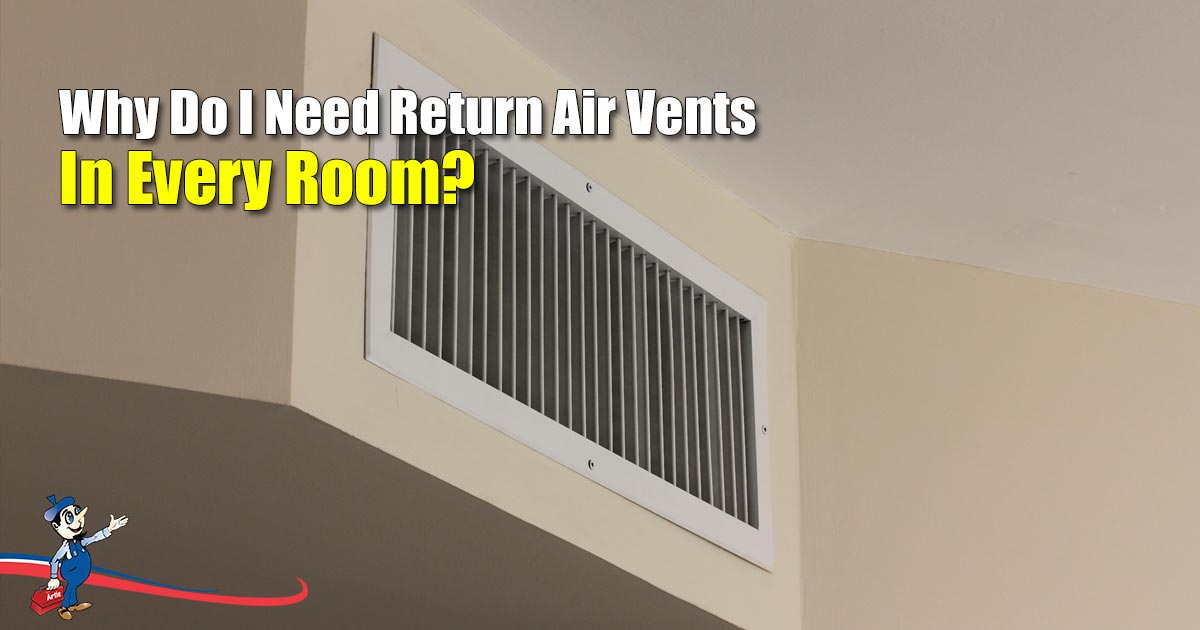
No, you do not necessarily need a dedicated return air vent in every room. However, every room needs an effective way for air to return to your HVAC system, whether through a dedicated return vent, transfer grille, jump duct, central return, or another properly designed return-air pathway.
Proper return airflow helps your HVAC system:
- Balance air pressure
- Circulate conditioned air
- Reduce hot and cold spots
- Control indoor humidity
- Filter indoor air
- Operate more efficiently
- Maintain consistent comfort throughout your home
Your HVAC system does more than push cool air into each room. It also has to pull air back toward the air handler so it can be filtered, cooled, and circulated again.
That return path is an essential part of a balanced HVAC system.
What Is a Return Air Vent?
A return air vent pulls indoor air back into your HVAC system.
Once the air enters the return side of the system, it can:
- Pass through the HVAC filter
- Move toward the air handler
- Be cooled or heated
- Return to your living spaces through supply vents
Supply vents and return vents perform different jobs.
- Supply vents: Deliver conditioned air into a room.
- Return vents: Pull indoor air back toward the HVAC system.
- Together: They create the circulation your HVAC system needs to maintain comfort.
If air can enter a room but cannot easily leave it, airflow and pressure problems can develop.
Why Does Every Room Need a Return Air Path?
Every room needs a way for air to circulate back toward the HVAC system.
When your AC sends conditioned air into a room, that incoming air has to displace the air already inside the space. A proper return-air pathway gives that air somewhere to go.
Effective return airflow can help:
- Balance room pressure: Air can move freely instead of becoming trapped.
- Improve circulation: Conditioned air can travel through the room more effectively.
- Reduce hot and cold spots: Better circulation helps maintain more consistent temperatures.
- Support HVAC efficiency: Your system does not have to work as hard to move air.
- Improve filtration: More indoor air can cycle back through the HVAC filter.
- Improve comfort: Rooms are less likely to feel hot, humid, or stuffy.
Every room needs proper return airflow, but that does not always mean installing an individual return vent in every room.
Does Every Room Need Its Own Return Air Vent?
Not always.
Some homes use dedicated return air vents in multiple rooms. Others rely on one or more central return vents combined with pathways that allow air to move out of individual rooms.
A room may have adequate return airflow through:
- A dedicated return air vent: Provides a direct route back to the HVAC system.
- A transfer grille: Allows air to move between rooms or into a hallway.
- A jump duct: Connects a room to another return-air area through ductwork.
- An undercut door: A gap beneath the door allows some air to escape.
- An open path to a central return: Works in areas where air can move freely through the home.
The right solution depends on factors such as:
- Home layout
- Room size
- Door placement
- Duct design
- HVAC equipment
- Location of central returns
- Amount of airflow each room requires
An HVAC professional can evaluate the system and determine whether each room has enough return airflow.
What Happens If a Room Does Not Have Enough Return Airflow?
Poor return airflow can create noticeable comfort and HVAC performance problems.
When a room receives conditioned air but that air cannot easily return to the system, pressure can build inside the room.
Common symptoms include:
- Uneven room temperatures
- Rooms that feel stuffy
- Weak airflow from supply vents
- High indoor humidity
- Longer HVAC run times
- Rising energy use
- Dusty or stale rooms
- Doors that are difficult to open or close
- Increased HVAC system strain
You may notice these problems most clearly when bedroom or office doors are closed.
If a room suddenly becomes warmer, more humid, or less comfortable after you close the door, inadequate return airflow could be part of the problem.
Do Return Air Vents Improve HVAC Efficiency?
Proper return airflow can help your HVAC system operate more efficiently.
Your system relies on a steady flow of air through both the supply and return sides of the ductwork. When return airflow is restricted, the system may have to work harder to circulate enough air.
Balanced return airflow can help:
- Reduce unnecessary energy use
- Improve air circulation
- Shorten excessive HVAC run times
- Reduce strain on the blower motor
- Maintain more consistent temperatures
- Improve overall system performance
- Reduce unnecessary wear on HVAC components
Poor return airflow is not the only cause of high energy bills or HVAC performance problems, but it is one possible issue our technicians evaluate when diagnosing airflow concerns.
Should Return Air Vents Stay Open?
Yes. Return air vents should generally remain open and unobstructed.
Blocking a return vent can restrict the amount of air your HVAC system can pull back into the system.
To maintain proper return airflow:
- Keep furniture away from return vents.
- Do not cover vents with rugs.
- Keep curtains from hanging over return grilles.
- Clean dust and debris from vent covers.
- Check vent locations when rearranging furniture.
- Avoid intentionally closing or blocking return vents.
- Keep interior doors open when practical if your home relies heavily on central returns.
A blocked return vent can affect more than the room where the vent is located. It can also change airflow throughout the HVAC system.
Can Poor Return Airflow Cause High Indoor Humidity?
Poor airflow can contribute to indoor humidity problems.
Your air conditioning system removes moisture as indoor air passes through the system. For that process to work effectively, air has to circulate back toward the HVAC equipment.
Poor return airflow may contribute to:
- Rooms that feel humid
- Stale indoor air
- Uneven cooling
- Musty odors
- Warm or uncomfortable rooms
- Longer AC run times
This is especially important in South Florida, where high outdoor humidity can make indoor comfort more difficult to maintain.
A properly balanced HVAC system helps keep air moving so your AC can cool and dehumidify your home more effectively.
What Are the Signs of Poor Return Airflow?
Return-air problems often create symptoms you can notice throughout your home.
Watch for:
- Rooms that are hotter or colder than the rest of the house
- Weak airflow from supply vents
- Rooms that become uncomfortable when the door is closed
- Doors that slam or resist closing
- Whistling or unusually loud vent noises
- High indoor humidity
- Stuffy or stale rooms
- Excess dust in certain areas
- Long HVAC run times
- Increasing energy bills
One symptom does not automatically mean you have a return-air problem. However, several of these issues occurring together can point to an airflow or ductwork concern.
How Can You Improve Return Airflow in a Room?
The right solution depends on your home’s existing ductwork and HVAC design.
Possible solutions may include:
- Adding a dedicated return air vent
- Installing a transfer grille
- Adding a jump duct
- Improving the airflow path to a central return
- Adjusting ductwork
- Removing airflow restrictions
- Rebalancing the HVAC system
- Correcting damaged or poorly designed ducts
It is important to identify the actual cause before making changes.
Adding a larger vent or modifying ductwork without evaluating system airflow can create new pressure or comfort problems elsewhere in the home.
What Is the Difference Between a Return Vent and a Supply Vent?
Supply and return vents are both essential, but they work in opposite directions.
- Supply vent
- Pushes conditioned air into the room.
- Delivers cooled or heated air.
- Connects to the supply side of the duct system.
- Return vent
- Pulls indoor air out of the room or surrounding area.
- Sends air back toward the HVAC system.
- Helps complete the circulation cycle.
A comfortable room needs both conditioned air coming in and a way for existing air to move back out.
Can a Central Return Vent Serve Multiple Rooms?
Yes, depending on the home’s design.
A central return may serve multiple rooms if air can move freely from those spaces back toward the return.
Problems can occur when:
- Bedroom doors remain closed
- Hallways have limited airflow
- Rooms are isolated from the central return
- Door gaps are too small
- Remodeling changes the original airflow path
A central return may work well in one home and poorly in another.
The key question is not simply how many return vents your home has. The important issue is whether air can move back to the HVAC system from every conditioned space.
When Should You Call an HVAC Professional?
Consider scheduling an HVAC inspection if your home has ongoing airflow or comfort problems.
Call for service if:
- One room is consistently hotter or colder than others.
- Rooms become uncomfortable when doors are closed.
- Airflow from supply vents feels weak.
- Your AC runs for unusually long periods.
- Your home remains humid while the AC is running.
- Return vents whistle or make excessive noise.
- Interior doors move unexpectedly because of air pressure.
- Energy bills increase without an obvious reason.
- You recently remodeled or changed the home’s layout.
- Multiple rooms have airflow problems.
An HVAC technician can inspect:
- Return vents
- Supply vents
- Ductwork
- Air filters
- Air handler performance
- Air pressure
- System airflow
- Overall duct design
That inspection can help determine whether the problem is related to return airflow or another HVAC issue.
Do You Need More Return Air Vents?
The number of return vents alone does not tell you whether your HVAC system is properly designed.
Your home may need additional return airflow if:
- Certain rooms regularly feel uncomfortable.
- Closed doors dramatically change room temperature.
- Airflow is weak in multiple areas.
- Your HVAC system struggles to maintain the thermostat setting.
- You have made changes to your home’s floor plan.
- Your existing return system cannot move enough air.
In some cases, an additional return vent may help. In others, a transfer grille, jump duct, duct repair, or system balancing may be the better solution.
The goal is to create an effective return-air path from every conditioned area back to the HVAC system.
Keep Your South Florida Home Comfortable With Proper Return Airflow
Return airflow plays an important role in your home’s comfort and HVAC performance.
Remember:
- Every room needs an effective return-air pathway.
- Every room does not necessarily need its own return vent.
- Return vents should remain open and unobstructed.
- Poor return airflow can contribute to uneven temperatures, humidity, pressure problems, and longer HVAC run times.
- Central returns can work when rooms have a clear path for air to reach them.
- Persistent airflow problems should be evaluated by an HVAC professional.
At Art Plumbing, Air Conditioning & Electric, we can evaluate your HVAC system, ductwork, and return airflow to identify the cause of uncomfortable rooms or poor system performance.
If your South Florida home has hot spots, weak airflow, excess humidity, or rooms that never seem to reach the right temperature, contact our team to schedule HVAC service.