Serving Broward, Palm Beach & Miami-Dade





Electrical Problems That Stop Ceiling Lights From Working

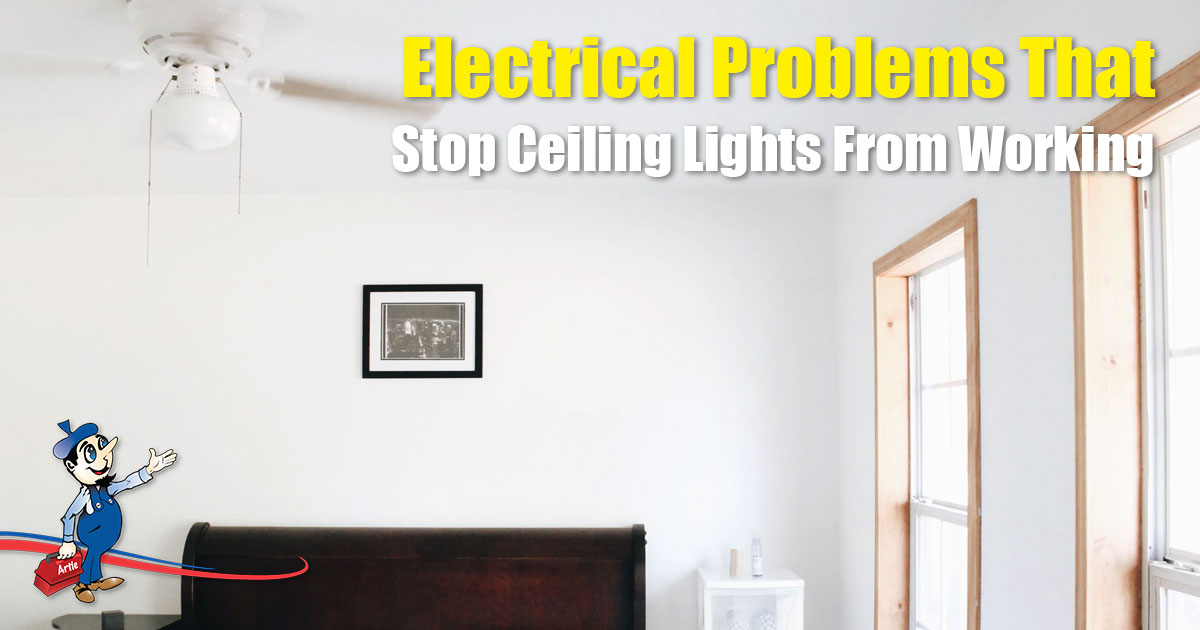
A ceiling light may stop working because of a burned-out bulb, a tripped circuit breaker, a faulty switch, damaged wiring, or a failed light fixture. Start by checking the bulb and electrical panel. If the breaker repeatedly trips or you notice flickering, buzzing, heat, sparks, discoloration, or a burning smell, turn off the circuit and contact a licensed electrician.
When you flip a switch and your ceiling light does not turn on, a burned-out bulb is often the first thing that comes to mind. Sometimes, replacing the bulb solves the problem. In other cases, the light failure may point to an issue with the switch, circuit, wiring, or fixture.
Electrical problems should not be ignored. A light that flickers, buzzes, smells like it is burning, or causes a circuit breaker to trip may indicate a potentially dangerous fault.
At Art Plumbing, Air Conditioning & Electric, our licensed electricians diagnose lighting and electrical problems throughout South Florida. Here are the most common reasons ceiling lights stop working and what you should do next.
What Should You Check First When a Ceiling Light Stops Working?
Before assuming that your home has a major electrical problem, start with a few basic checks.
You can safely check the following:
- Confirm that the light switch is fully turned on
- Replace the bulb with a new bulb of the correct type and wattage
- Make sure the bulb is securely installed
- Check whether other lights or outlets in the room are working
- Look at your electrical panel for a tripped circuit breaker
- Check for a wall switch, dimmer, remote, or smart control that may affect the light
Stop troubleshooting and call an electrician if you notice:
- A burning smell
- Buzzing or crackling sounds
- Sparks
- Scorch marks or discoloration
- A switch or fixture that feels warm or hot
- A breaker that trips repeatedly
- Exposed or damaged wiring
- Flickering that continues after replacing the bulb
Do not remove electrical covers, touch wiring, or attempt repairs unless you have the proper training and equipment.
Can a Loose or Burned-Out Bulb Stop a Ceiling Light From Working?
A loose or burned-out bulb is one of the most common reasons a ceiling light stops working.
Signs that the bulb may be the problem include:
- Only one light is affected
- Other lights and outlets in the room still work
- The bulb appears dark or discolored
- The light flickered before going out
- The bulb is loose in the socket
- The bulb has exceeded its expected lifespan
Turn the light switch off and allow the bulb to cool before touching it. Remove the existing bulb and install a bulb compatible with the fixture.
Make sure the replacement bulb:
- Uses the correct base size
- Does not exceed the fixture’s maximum wattage
- Is compatible with the dimmer, if the light uses one
- Is rated for enclosed fixtures, if applicable
- Is designed for damp or wet locations, if installed in a bathroom or outdoor area
If a new bulb does not work, the problem may be with the socket, switch, wiring, or power supply.
Could a Tripped Breaker or Power Problem Be Affecting the Light?
A ceiling light cannot work if power is not reaching the circuit.
Power interruptions may be caused by:
- A tripped circuit breaker
- A local power outage
- An overloaded electrical circuit
- A ground fault circuit interrupter that has tripped
- An arc fault circuit interrupter that has tripped
- A loose connection in the electrical panel
- A damaged wire or circuit component
Check whether other lights or outlets have also stopped working. If several fixtures are affected, the problem may involve the circuit rather than the individual light.
At the electrical panel, look for a breaker that is positioned between the on and off settings. To reset it:
- Move the breaker completely to the off position
- Move it back to the on position
- Check whether power has returned
A breaker should not be reset repeatedly. If it trips again, leave it off and contact a licensed electrician.
Repeated breaker trips may indicate:
- An overloaded circuit
- A short circuit
- A ground fault
- Damaged wiring
- A defective fixture
- A failing breaker
- A problem with another device connected to the circuit
An electrician can test the circuit, identify the cause, and complete the appropriate repair.
How Do Wiring Problems Cause Ceiling Lights to Stop Working?
Electrical wiring carries power from your electrical panel to the switch and light fixture. If a wire becomes loose, damaged, or disconnected, the ceiling light may stop working or behave unpredictably.
Wiring problems can develop because of:
- Loose electrical connections
- Aging wire insulation
- Improper installation
- Previous do-it-yourself repairs
- Heat damage
- Water or moisture exposure
- Rodent damage
- Remodeling or construction work
- Physical damage inside the ceiling or wall
Possible signs of a wiring issue include:
- Intermittent lighting
- Frequent flickering
- Buzzing or crackling
- A burning or unusual odor
- Discoloration around the switch or fixture
- A light that works only when the switch is moved a certain way
- A circuit breaker that repeatedly trips
- Multiple lights losing power at the same time
Wiring problems can create shock and fire hazards. Turn off the affected circuit and contact an electrician if you suspect damaged or loose wiring.
How Can You Tell if the Light Switch Is Faulty?
Light switches can wear out over time. Internal contacts may loosen, become damaged, or stop transferring power to the fixture.
A faulty switch may cause the ceiling light to:
- Stay off when the switch is turned on
- Turn on only occasionally
- Flicker when the switch is moved
- Shut off unexpectedly
- Work only when the switch is held in a certain position
Other warning signs include:
- A loose switch
- A switch that feels warm
- Crackling or buzzing sounds
- Sparks
- A burning smell
- Brown or black discoloration
- A dimmer that no longer adjusts the light correctly
Do not continue using a switch that feels hot, makes noise, or shows signs of burning. Turn off the circuit and schedule an electrical inspection.
A licensed electrician can determine whether the problem is caused by the switch itself, a loose connection, the fixture, or another part of the circuit.
When Is the Ceiling Light Fixture the Problem?
The fixture may be defective if the bulb, breaker, and switch appear to be working properly.
Light fixtures contain several components that can fail, including:
- The bulb socket
- Internal wiring
- Terminal connections
- Drivers used in integrated LED fixtures
- Transformers
- Ballasts
- Remote receivers
- Dimmer components
- Mounting and grounding connections
Signs of a damaged fixture may include:
- A new bulb does not turn on
- Bulbs burn out unusually quickly
- The socket appears cracked, corroded, or burned
- The fixture flickers or shuts off after warming up
- An integrated LED light becomes dim or stops working
- The fixture buzzes
- The fixture smells hot or burned
- There are scorch marks near the bulb or wiring
Some fixtures can be repaired by replacing a damaged component. Others should be replaced completely, especially if they are old, heat-damaged, corroded, or incompatible with modern bulbs and controls.
An electrician can inspect the fixture and recommend the safest option.
Why Does My Ceiling Light Flicker?
A flickering ceiling light may be caused by something simple, such as a loose bulb. It may also indicate an electrical problem that needs professional attention.
Common causes of flickering include:
- A loose bulb
- An incompatible LED bulb
- An LED bulb that is not compatible with the dimmer
- A worn light switch
- A loose electrical connection
- Voltage fluctuations
- An overloaded circuit
- A failing fixture
- Damaged wiring
Occasional flickering from one bulb may be related to the bulb or fixture. Flickering that affects several lights may indicate a larger circuit, panel, or utility issue.
Call an electrician when flickering:
- Happens frequently
- Affects multiple rooms
- Occurs when an appliance turns on
- Is accompanied by buzzing
- Causes breakers to trip
- Is associated with heat, odor, or discoloration
Why Does the Breaker Trip When I Turn On the Ceiling Light?
A breaker that trips when you turn on a ceiling light is responding to an abnormal electrical condition.
Possible causes include:
- A short circuit in the fixture
- Damaged wiring
- A loose connection
- A defective light switch
- An overloaded circuit
- A failing breaker
- Moisture inside the fixture
- An improperly installed fixture or bulb
Do not repeatedly reset the breaker. Repeated tripping means the underlying problem is still present.
Leave the affected circuit off and contact a licensed electrician. The electrician can inspect the switch, fixture, wiring, circuit load, and electrical panel to find the fault.
What Ceiling Light Problems Can You Check Safely?
Homeowners can perform a limited number of visual and basic checks without opening the fixture or touching wiring.
Safe checks may include:
- Testing the light with a new bulb
- Confirming that the bulb is correctly installed
- Checking the bulb’s wattage and compatibility
- Checking whether other lights have lost power
- Checking the electrical panel for a tripped breaker
- Resetting a breaker one time
- Checking whether a remote control needs new batteries
- Confirming that a smart bulb or switch is connected
- Looking for visible damage without removing covers
- Checking whether a dimmer is compatible with the bulb
Stop immediately if you encounter:
- Exposed wiring
- Melted plastic
- Scorch marks
- Sparks
- Smoke
- Burning odors
- Water near the fixture
- A hot switch or fixture
- Repeated breaker trips
These conditions require professional electrical service.
When Should You Call an Electrician for a Ceiling Light That Is Not Working?
Call a licensed electrician when replacing the bulb and checking the breaker do not restore the light.
You should also schedule electrical service when:
- The circuit breaker trips more than once
- The ceiling light flickers frequently
- The switch or fixture feels warm
- You hear buzzing, popping, or crackling
- You smell burning plastic or wiring
- You see sparks or scorch marks
- The socket is cracked, loose, or corroded
- Multiple lights or outlets have lost power
- The light stops working after a leak or water intrusion
- The fixture has damaged or exposed wiring
- A newly installed fixture does not work
- You are unsure whether the fixture is safely grounded
- The problem returns after a temporary fix
Electrical troubleshooting often requires voltage testing, circuit tracing, load testing, and inspection of concealed connections. A licensed electrician has the tools and training to perform this work safely.
How Can You Help Prevent Future Ceiling Light Problems?
Not every electrical problem can be prevented, but good lighting and electrical habits can reduce unnecessary wear and help you spot problems earlier.
Consider the following steps:
- Use bulbs that match the fixture’s wattage rating
- Choose bulbs rated for the fixture type and location
- Use dimmable bulbs only with compatible dimmer switches
- Avoid installing oversized bulbs in enclosed fixtures
- Replace damaged switches and fixtures promptly
- Keep indoor fixtures away from moisture
- Have water-damaged fixtures professionally inspected
- Do not ignore flickering, buzzing, or recurring breaker trips
- Avoid overloading electrical circuits
- Schedule an electrical inspection for aging or frequently repaired systems
Always follow the fixture manufacturer’s instructions when selecting bulbs or replacement components.
Schedule Ceiling Light Repair in South Florida
A ceiling light that will not turn on may be a minor inconvenience, but it can also be a warning sign of a more serious electrical problem.
At Art Plumbing, Air Conditioning & Electric, our licensed and insured electricians provide electrical troubleshooting and repair for homeowners across Broward, Palm Beach, and Miami-Dade counties. We can inspect the switch, fixture, wiring, breaker, and circuit to identify the cause and recommend a safe, code-compliant solution.
Choose our team for:
- Licensed and insured electrical service
- Professional electrical diagnostics
- Lighting, switch, wiring, and circuit repairs
- Clear explanations of your repair options
- Respectful service inside your home
- Electrical solutions completed with safety in mind
Do not ignore repeated breaker trips, flickering lights, burning smells, or unusual heat. Contact Art Plumbing, Air Conditioning & Electric to schedule ceiling light troubleshooting and electrical repair in South Florida.