Serving Broward, Palm Beach & Miami-Dade





Can My Insurance Company Force Me To Get A Water Heater Replaced?

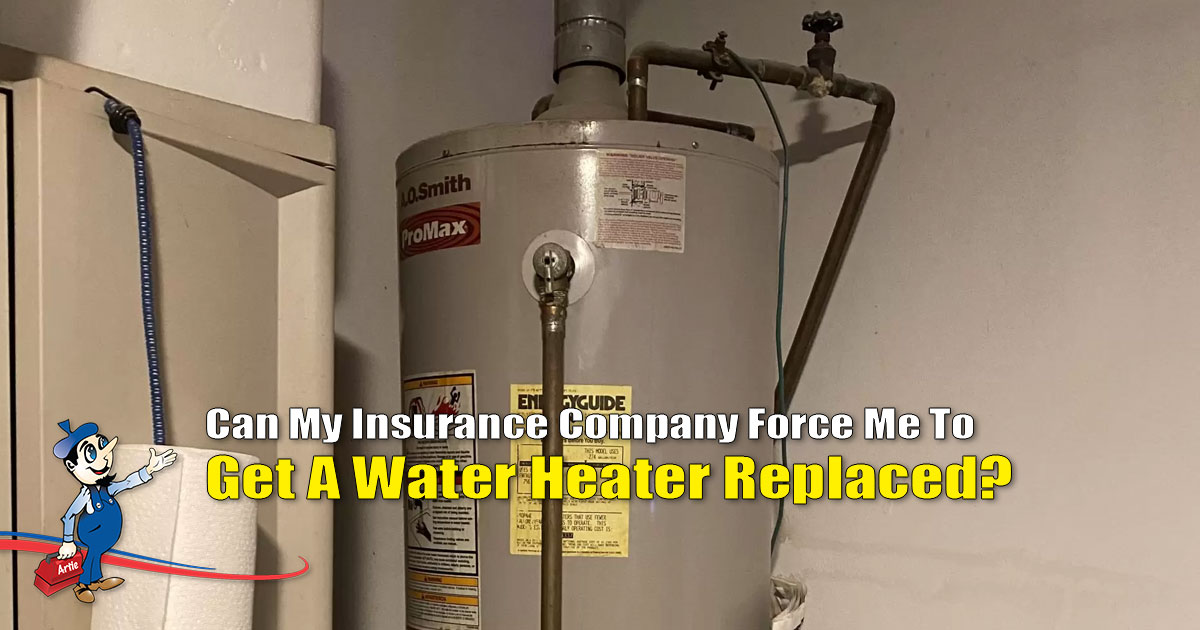
Your insurance company cannot physically force you to replace your water heater, but it can require replacement as a condition of keeping, renewing, or qualifying for homeowners’ insurance. If your water heater is old, leaking, corroded, poorly maintained, or not installed to code, your insurer may consider it a risk of water damage.
Aging water heaters are one of those home maintenance issues that can quickly become an insurance problem. What looks like a minor concern during an inspection can become a policy requirement, a renewal issue, or a coverage delay if the unit is considered likely to fail.
In this guide, we’ll explain why insurance companies care about water heater age, when they may require replacement, what signs they look for, and what homeowners should do if they receive a replacement notice.
Why Do Insurance Companies Care About Old Water Heaters?
Insurance companies are focused on reducing risk. An older water heater can become a serious concern because it may leak, burst, or cause major water damage inside the home.
Tank-style water heaters are especially important because they hold many gallons of water. If the tank fails, it can damage flooring, drywall, cabinetry, furniture, electrical systems, and personal belongings.
Insurers may pay close attention to:
- Water heater age: Older units are more likely to leak, corrode, or fail.
- Rust or corrosion: Visible rust or corrosion may indicate that the tank or connections are deteriorating.
- Leaks or standing water: Active leaks increase the likelihood of a water damage claim.
- Poor maintenance: A neglected water heater is more likely to break down unexpectedly.
- Improper installation: Code violations can pose safety risks and increase the risk of damage.
- Previous water damage claims: Prior claims may make the home appear higher-risk to the insurer.
Can Home Insurance Be Denied Because of an Old Water Heater?
Yes. A homeowners’ insurance company may refuse to issue a new policy, decline renewal, limit coverage, or require replacement if the water heater is considered unsafe or too old.
This does not mean the insurer is “forcing” the replacement directly. It means the company may not be willing to insure the home unless the risk is corrected.
For example, an insurer may require replacement if the water heater:
- Is past its expected service life
- Shows signs of rust, corrosion, or leakage
- Was installed incorrectly
- Does not meet current code requirements
- Has caused previous water damage
- Lacks proper safety features
- Has no maintenance documentation
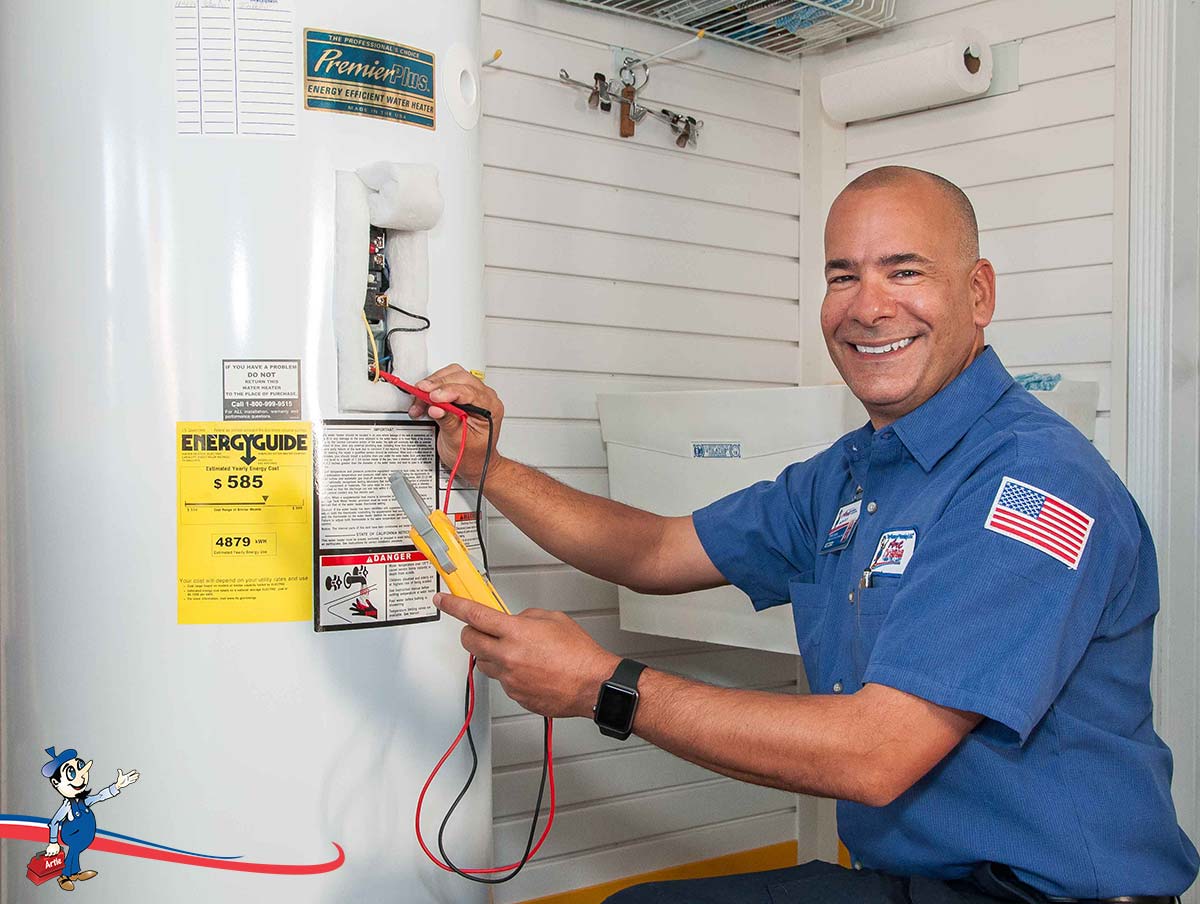
If this happens, a licensed plumber can inspect the system, confirm its condition, and recommend repair or replacement.
How Old Is Too Old for a Water Heater?
Most traditional tank water heaters last about 8 to 12 years, depending on the model, installation quality, water quality, and maintenance history. Some may last longer, but insurance companies may still become concerned once a unit reaches the 10-year mark.
Tankless water heaters often last longer than traditional tank systems, but they still require routine maintenance and proper installation.
The age of the water heater is usually found on the manufacturer’s label or serial number. If the installation date is unknown, a licensed plumber can help determine the unit’s approximate age and condition.
What Are the Warning Signs Your Water Heater Should Be Replaced?
Insurance concerns often start with visible signs of wear. Homeowners should watch for:
- Rust on the tank or fittings
- Water pooling around the unit
- Rumbling or popping noises
- Inconsistent hot water
- Discolored or rusty hot water
- A leaking pressure relief valve
- Corroded pipes or connections
- Moisture around the base of the tank
- A unit that is more than 10 years old
Any of these signs may indicate the water heater is becoming a risk. Even a small leak can lead to larger damage if the tank fails.
What Should You Do If Your Insurance Company Requires Replacement?
If your insurer sends a notice about your water heater, do not ignore it. The notice may include a deadline for inspection, repair, or replacement.
Take these steps:
- Review the insurance notice carefully: Look for the reason replacement is required and the deadline to complete the work.
- Schedule a professional inspection: A licensed plumber can determine whether the unit is safe, repairable, or due for replacement.
- Request written documentation: Your insurer may ask for an invoice, inspection report, permit, or proof of replacement.
- Replace the unit if needed: If the water heater is old, leaking, or unsafe, replacement is often the fastest way to satisfy insurance requirements and protect the home.
- Send proof to your insurance company: Keep copies of all documentation for your records.
Should You Repair or Replace the Water Heater?
Repair may be an option if the issue is minor, such as a faulty valve, loose connection, or thermostat problem. Replacement is usually the better option when the tank is old, leaking, corroded, or repeatedly breaking down.
A good rule of thumb: if the water heater is near the end of its expected lifespan and the repair is expensive, replacement is usually the smarter investment.
Replacement may also be necessary when an insurance company has specifically requested a new unit.
Can a New Water Heater Help With Insurance Approval?
Yes. Replacing an old or unsafe water heater can help satisfy insurance requirements and reduce the risk of future water damage. It also gives homeowners better documentation, improved efficiency, and greater peace of mind.
A professional water heater replacement may include:
- Removal of the old unit
- Proper sizing for the home
- Code-compliant installation
- Updated valves and connections
- Safety checks
- Permit support when required
- Final documentation for insurance records
For homeowners dealing with an insurance requirement, professional installation is especially important. Insurers may reject DIY work or installations that are improper.
Do Not Wait If Your Insurance Company Flags Your Water Heater
An insurance company cannot force you to replace your water heater, but it can make replacement a condition of coverage. If your unit is old, leaking, rusted, or no longer code-compliant, acting quickly can help protect your policy and your home.
Art Plumbing, Air Conditioning & Electric provides professional water heater inspections and replacements throughout South Florida. If your insurer has requested replacement, or your water heater is showing signs of age, schedule service today and get the documentation you need to move forward with confidence.
Call Art Plumbing, Air Conditioning & Electric today or schedule your water heater replacement online.